

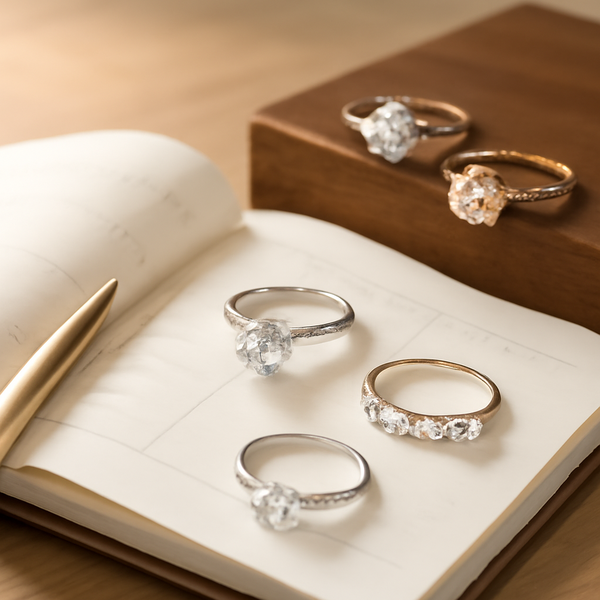
Explore a dazzling collection of diamond rings designed to capture your heart and elevate your style. Whether you're celebrating a special milestone, seeking the perfect engagement ring, or simply treating yourself to a timeless piece, our selection offers unparalleled brilliance and exquisite craftsmanship. Each diamond is meticulously chosen for its exceptional quality, cut, color, and clarity, ensuring a breathtaking sparkle that lasts a lifetime. From classic solitaires to intricate halo designs and stunning anniversary bands, you'll find a ring that perfectly expresses your unique story and enduring love. Discover the magic of diamonds and find a symbol of your cherished moments.
The Timeless Allure of Diamond Engagement Rings
Diamond engagement rings have long been the ultimate symbol of love and commitment, and for good reason. The enduring hardness of the diamond, second only to the sapphire, signifies the strength and permanence of a bond. When choosing an engagement ring, understanding the '4 Cs' – cut, color, clarity, and carat weight – is paramount to finding a stone that truly shines. The cut, in particular, is crucial as it dictates how well a diamond reflects light, contributing to its sparkle and brilliance. A well-cut diamond will have superior fire and scintillation, making it appear more vibrant. Color grades range from D (completely colorless) to Z (light yellow or brown), with rarer, more colorless diamonds commanding higher prices. Clarity refers to the presence of internal inclusions or external blemishes, with internally flawless diamonds being the most prized. Carat weight, a measure of a diamond's mass, influences its size and, consequently, its value. Beyond the 4 Cs, consider the ring's setting style, such as the classic solitaire, romantic halo, or elegant three-stone design, each offering a unique aesthetic that complements the diamond and the wearer's personal taste. The metal choice – platinum, white gold, yellow gold, or rose gold – also plays a significant role in the overall look and feel of the engagement ring, offering a variety of hues and durability to suit individual preferences and lifestyles.
Beyond Engagement: Diamond Rings for Anniversaries and Special Celebrations
While diamond engagement rings often steal the spotlight, diamond rings are also perfect for commemorating other significant life events and anniversaries. An anniversary band, often designed with a continuous line of diamonds, represents the unending nature of love and a journey shared. These rings can be worn alone or stacked with an engagement ring for a layered, luxurious look. For milestone birthdays, graduations, or career achievements, a diamond ring serves as a sophisticated and lasting reminder of accomplishment and personal growth. Consider a diamond eternity band for a significant anniversary, symbolizing an unbroken circle of love. Alternatively, a dazzling cocktail ring featuring a larger, perhaps colored, diamond or a cluster of smaller stones can be a statement piece for any special occasion. The versatility of diamonds means they can be set in a variety of styles, from subtle and understated to bold and eye-catching. When selecting a ring for an anniversary or celebration, think about the recipient's existing jewelry collection and their personal style. A delicate diamond tennis bracelet, often featuring a single row of diamonds, is another elegant option that complements any outfit and signifies enduring affection and appreciation. The enduring sparkle of diamonds makes them an ideal choice to mark the passage of time and the deepening of relationships, transforming ordinary moments into treasured memories.
Understanding Diamond Carat Weight and Its Impact on Value
Carat weight is one of the most tangible attributes of a diamond, representing its mass rather than its physical size, though the two are often correlated. One carat is equal to 200 milligrams. Diamonds are priced based on a complex interplay of factors, including carat weight, cut, color, and clarity. Generally, as carat weight increases, the price per carat also increases exponentially. This means a 2-carat diamond will cost significantly more than two 1-carat diamonds of comparable quality. However, it's important to note that a diamond that appears larger doesn't always mean it has a higher carat weight. The cut of a diamond can greatly influence its visual appeal; a well-proportioned diamond with a shallower or deeper cut might appear smaller or larger than its actual carat weight would suggest. For instance, a diamond with a wider diameter due to its cut can give the illusion of being larger than a heavier, more compact stone. When considering carat weight, many buyers aim for 'magic sizes' – those just under a full carat, such as 0.90 carats, which can offer substantial savings while still appearing very close in size to a 1-carat stone. It's also worth exploring diamonds in the slightly lower color or clarity grades if budget is a concern, as these imperfections are often invisible to the naked eye and can lead to significant cost reductions, allowing you to allocate more of your budget towards carat weight or a superior cut.
The Importance of Diamond Clarity and Color in Radiance
Diamond clarity and color are two of the most critical 'Cs' that determine a diamond's beauty and value, directly influencing its sparkle and overall appearance. Clarity refers to the presence or absence of internal characteristics (inclusions) and external imperfections (blemishes). The Gemological Institute of America (GIA) grading scale ranges from Flawless (FL/IF) to Included (I1, I2, I3). Inclusions can include tiny crystals, clouds, or feathers within the diamond, while blemishes can be surface cracks or polish lines. For most consumers, diamonds graded as Very Slightly Included (VS1, VS2) or Slightly Included (SI1, SI2) offer excellent value, as any inclusions are typically microscopic and do not detract from the diamond's brilliance when viewed with the naked eye. Color, on the other hand, refers to the natural body color of a diamond, with the GIA scale grading from D (colorless) to Z (light yellow or brown). Colorless diamonds (D, E, F) are the rarest and most valuable, allowing light to pass through them with maximum brilliance. As you move down the scale, a slight yellowish or brownish tint becomes noticeable. However, diamonds in the near-colorless range (G, H, I, J) often appear colorless when set in jewelry, especially in white gold or platinum, and can offer significant savings. The interplay between color and clarity is fascinating; a diamond with a slightly warmer color might appear more brilliant if it has exceptional clarity, and vice versa. Understanding these grades helps in making an informed decision to achieve the desired balance of radiance and value for your chosen diamond ring.
Caring for Your Diamond Ring to Preserve Its Brilliance
To ensure your diamond ring retains its breathtaking sparkle for years to come, proper care and maintenance are essential. Diamonds, while incredibly hard, are not indestructible. They can chip or fracture if subjected to sharp blows, and their surfaces can be scratched by other hard materials. Regular cleaning is one of the most effective ways to keep your diamond ring looking its best. A simple solution of warm water and mild dish soap, gently scrubbed with a soft toothbrush, can remove dirt, oils, and lotions that dull the diamond's shine. Rinse thoroughly and dry with a lint-free cloth. For a deeper clean, an ultrasonic cleaner can be effective, but it's crucial to ensure your diamond is not set with any stones that could be loosened by the vibrations, such as emeralds or pearls. It's also advisable to remove your diamond ring when engaging in activities that could lead to damage or excessive dirt accumulation, such as household chores, gardening, or exercising. Avoid exposing your ring to harsh chemicals like chlorine, bleach, or ammonia, as these can damage the metal setting and even affect the diamond's surface over time. Professional inspections by a jeweler are recommended at least once a year. They can check the security of the setting, clean the ring thoroughly, and polish any minor scratches on the metal, ensuring your treasured diamond ring remains as beautiful as the day you acquired it.